


Field Notes From Nearly 20 Years In Environmental Services
By Patrick Upham
Environmental Service Manager
While I have not been part of all 50 years of Triad’s history, joining in 2005 has given me a front-row seat to nearly two decades of change and progress within Triad and the environmental industry.
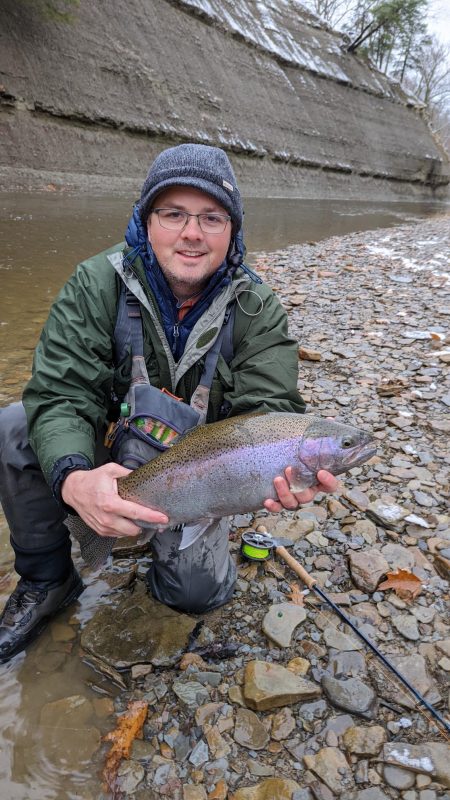 My interest in the environment did not begin with one defining moment. It developed gradually, starting in the suburbs of Philadelphia, where I spent my childhood outdoors. I built bike trails and forts in the woods, made dams in streams, went fishing and camping, and spent as much time outside as possible.
One moment that stands out came during high school in an environmental science class. My teacher told us that if we walked through the grass instead of staying on the sidewalk, we were “killing the fish”. It sounded extreme, but his explanation stuck with me. Damaging grass exposes soil, creates runoff, and leads to sediment entering streams. That lesson was my first real introduction to the idea of interconnectedness and cause/effect in the environment. It taught me to think critically about how small actions can have larger consequences. That mindset followed me through college at Shippensburg University, where I earned a degree in geoenvironmental studies, and eventually brought me to Triad.
When I first started my career, what excited me most was working outside, collecting field data, learning as much as possible, and being part of a process that identified environmental issues and helped develop solutions. As I progressed in my career, changing positions and ultimately becoming the Eastern Region’s Environmental Services Manager did not really impact how I approach environmental work. Instead, it reinforced how important teamwork and collaboration are. Every project depends on contributions from multiple people and understanding how each role fits into the bigger picture has given me a greater appreciation for the collective effort it takes to get work done.
Training in environmental consulting has remained grounded in experience throughout my time at Triad. Senior staff mentoring newer employees is still one of the most effective ways to learn how to do the work and do it right. Environmental consulting is, and always will be, an experience-based profession. With experience comes better judgment and stronger problem-solving skills. Triad’s environmental department has consistently benefited from strong senior-level expertise, which has supported employee growth and continuity over the years. While fieldwork remains largely the same and regulations continue to evolve, the most noticeable changes have occurred in the office. Research, reporting, and documentation have become far more efficient.
Technology has driven much of that change. Early in my career, research meant flipping through books and manuals. Today, information is readily available online, allowing staff to use more complex analysis much earlier. Across all Triad offices, the environmental department uses cloud-based reporting software called Quire. This tool allows teams to collaborate, maintain standardized language, and produce consistent, reliable reports for our clients. With more than 40 report and proposal templates available, newer staff can quickly become part of the workflow and contribute effectively.
As Triad looks to its next 50 years, the future of environmental consulting will continue to evolve. Artificial intelligence will likely play a role in improving efficiency, and we already use it in limited ways to support writing and reporting. However, I do not believe technology will ever replace the human ability to identify problems and develop thoughtful solutions. Beyond technology, one of the most significant challenges ahead will be water. Water availability, water rights, and conservation are becoming increasingly critical issues, especially as access to clean drinking water continues to be a concern.
Looking back on nearly 20 years at Triad reinforces how much has changed and how much has stayed the same. The tools may change, but the responsibility to protect our environment remains the same. Sometimes the best advice is also the simplest. Start small, do your part, and remember that everything is connected. And yes, stay off the grass.